Sorry but we’re experiencing some issues with our telephones at the moment. Please call us 07570 899000 until we get this resolved

+44 (0)1793 975 353
office@keyperformancetraining.co.uk
The History of Key Performance Training

The History of Key Performance Training

About Bob Hayward- The Managing Director and owner of Key Performance Training

Bob has had quite a journey from humble beginnings near Broad-water Farm in Tottenham (yes, he is a Spurs fan) failing his A levels and even the entrance exam for a Postman. Then a bad motor bike accident changed the course of his life forever. The six-week stay in hospital and the one year on crutches it took to recover led him to become a nurse. First a Registered General Nurse, then a spell in Intensive Care before taking a second-degree course in Psychiatric Nursing. After a 12-year career in nursing he took up selling and built a nursing agency from scratch to a 5.6 million turnover in five years. In his business career, Bob has started four businesses from scratch and built each of them to 1M turnover or more.

Bob actually hit the national headlines in 2001, but not for his business or consultancy skills, this was when he ran 33 marathons in only 40 days to get from Lands End to John O’groats in aid of a burns victim called ‘Podge’. He continues to raise money for charities close to his heart through marathon running and completed a further major test of endurance in October 2005 by running 6 marathons over 6 days across one of the hottest places in the world~ Death Valley~ this time in aid of Swindon food bank, tackling issues of poverty and deprivation.

How Key Performance Training started:

In 2017 Bob was involved in one of his many business ventures throughout his life; a recruitment firm recruiting pickers and packers for warehouses. He became aware that there was a huge demand for Forklift Truck Drivers in general but specifically in Swindon and the surrounding areas. As the business minded man he is, he decided to try and meet this demand by setting up a FLT training company to get as many people their license as possible and also to upskill pickers and packers.

The next stage? He needed to find a warehouse. After searching, he found a suitable location in Upper Stratton Headlands Unit trading estate where ‘Mr Shifter’ a local house moving and storage company were located and had enough room to rent out half of the warehouse for KPT. Bob and the 3 owners of Mr Shifter came to an agreement that they would all co-own the business and after months of finalisations on the 19th December 2017 Key Performance Training was born.

Although Bob had expertise and business knowledge behind him, he had no idea how to operate, let alone teach people how to operate Forklift Trucks. This was where the expert came in – David Gearon.

David had years of FLT training experience behind him from working as a trainer at Honda for 5 years, being a subcontractor for a company called Mentor for a further 2 years and then going on to turn around a company with a particularly bad reputation of their safety around FLT and getting them to do things the proper way. Whilst Bob was creating KPT, David was working in a job that he wasn’t enjoying and wanted to get back into training. By chance, as his contract was coming to an end, he saw advertised a job as a FLT trainer for a new company Key Performance Training and applied instantly. The recruiters knew how amazing David was at what he does and was surprised that he was out of training work. He was invited in for an interview at the warehouse which solidified that he would be the perfect man for the job.

Now , 4 years later and with Bob now as the sole owner and David as the head trainer. KPT is still surviving; even through a pandemic where nobody could be trained!
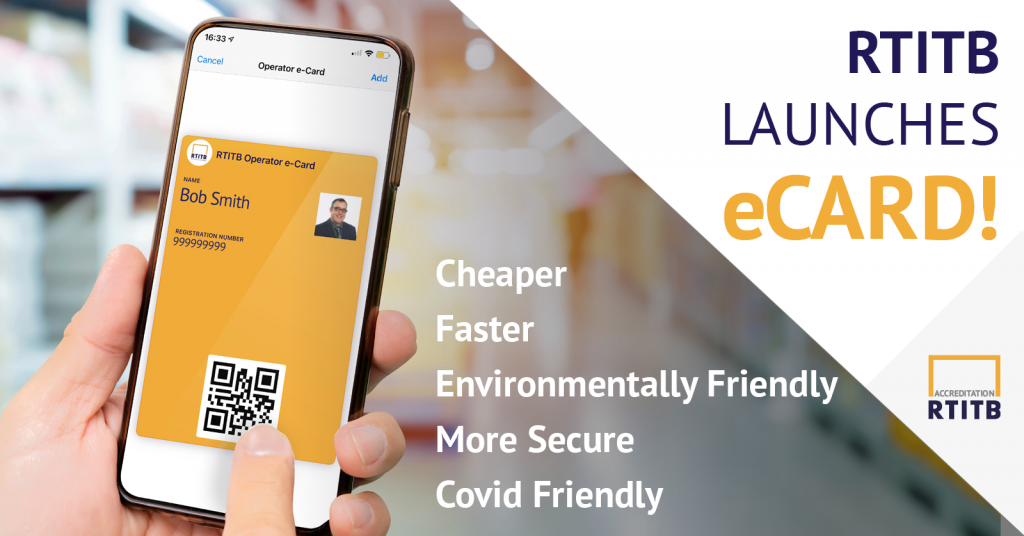
Introducing Faster, More Secure, Covid &Environmentally friendly RTITB eCards

Introducing Faster, More Secure, Covid &Environmentally friendly RTITB eCards

We have partnered with RTITB, the UK’s leading accrediting body for forklift and plant operator training, to offer you new, secure, environmentally friendly electronic ID cards (the RTITB eCard), instead of the plastic ID cards offered by so many other accrediting bodies.

The brand new eCard – which launched on Monday 12th July 2021 – will see materials handling equipment (MHE) operators successfully completing our RTITB courses receive a digital ID card detailing their RTITB qualifications. The new eCards can be downloaded and stored in Apple Wallet (Apple smartphones) or Google Pay (Android smartphones) providing you supply your email address when training with us.

Information on your eCard will include:

  • Your photo (passport style)
  • Your name
  • Your RTITB registration number
  • RTITB logo
  • Accrediting Bodies Association for Workplace Transport (ABA) logo
  • ABA truck code (where applicable)
  • Our company name and website address
  • Course title and QR code to easily verify you as the operator

With the new RTITB eCard, you will receive your proof of training quicker than ever before, thanks to an average four-hour delivery time (from RTITB to us). To ensure data security and give you assurance a unique verification code is sent to your designated email address so that only you can download your eCard from the web link we will provide you with.

If you have any questions or queries about eCard, the team at RTITB would be more than happy to answer your questions – simply email NORS_team@rtitb.com or learn more about eCard by clicking here.

If you’re ready to get started on an operator course with us, and receive a brand RTITB eCard following completion, contact us on david.gearon@keyperformancetraining.co.uk

The 5 main benefits of cross training employees.

The 5 main benefits of cross training employees.

Cross- training employees can be a catalyst to a huge improvement in workforce productivity of any business. Here are the 5 main benefits of cross-training in the warehouse sector, however the advantages do not stop here, they are endless!

What does it mean to cross train an employee?

Cross-training is building the skills of your employees so that they can work in several different roles and carry out tasks even if they aren’t part of their main daily responsibilities. As a result, you, as the employer, can increase productivity in the workplace by making the maximum use out of the latent talents and skillsets of your employees. 

For example, when summer is approaching and people are rushing into travel agents to book their last-minute holidays, if employees who usually handle telephone customer service enquiries are also trained to handle walk-in customers, then the travel agency will be more able to handle the increased demand.

Similarly, in the warehouse sector if someone in your team who usually works in production work could also operate forklift trucks you could move them temporarily to the loading team if there is a spike in demand. This prevents orders falling behind and increases the overall efficiency and effectiveness of your team.

Cross-training, specifically in the warehouse sector, is something that gets spoken about more than it is actually implemented. What is the main reason for that? Because people are simply unaware of the multitude of gain generated from this method. Hopefully after reading this blog post, you will be part of the percentage who are aware of the benefits, and will be tempted to use that knowledge to your advantage!

1. Great return on investment

The key to cross-training making a great return on investment is realising that the talent you are trying to outsource is most likely already within your business. Once you’ve had this realisation and act upon it, you are likely to see ways to boost to your bottom line.

2. Improved employee retention

A study conducted at the university of Warwick via Forbes found that on average, happy and engaged employees are 12% more productive than their unhappy counterparts. Cross-training has a significant effect on individual employee happiness because with a broader range of skills employees will feel as though they are being invested in and in return will become more engaged. Continuously focusing on the skillset of your existing employees rather than trying to recruit new employees with prior qualifications, will keep long term employees more committed to stick around.

3. Reduced impacts when employees are absent

This is a fairly straightforward benefit but often people do not realise the extent of a positive impact having cross-trained employees can have when absence occurs. For example, if your business has 10 employees and each of them have a total of 25 holidays per year that would be a total of 250 days a year where at least 1 person’s list of responsibilities are not getting completed. Does that sound efficient to you?

When your work-force is “cross-fit”, you will be able to substitute somebody from a less busy shift or a different sector who has the knowledge to cover for the absent employee. As a result, a significant increase to the number of responsbilities and tasks that are being completed will arise and the productiveness\output of the company will expand.

Ideally, even in a small company, you would have three people or more who could do any single job – even if only to ‘hold the fort’ professionally for a shift or a day. There is a direct link between the competency of your people and the confidence your customers have in you as a supplier.

4. Better employee collaboration

There are two types of employees. Those who have just expertise in one area (not cross-trained) and those who have expertise in one particular aspect but also still have a broad knowledge of other aspects in the company (cross-trained). When you are the non-cross trained type of employee you are hyper-focused to that one particular area and therefore find it difficult to collaborate with those in other sectors of your company.

Good collaboration is crucial within a company as it allows you and a team to solve problems together, speeding up the process of finishing a task and avoiding breakdowns in communication.

5. Makes your company more agile

The actual process of cross-training employees may reveal areas of strengths and weaknesses in employees. Throughout the on-the-job-training hidden talents and strengths may be revealed that means people would work better in another area or field of the business. You can then change people around accordingly. This makes your company more agile and responsive to change as-well as increasing flexibility when needing to fill last minute absences.

Being an agile company has a range of benefits such as more resilience, quicker decision making, more collaborative and also quick mobilization.

How Key Performance Training can help your business with cross-training

Key Performance Training based in Swindon and RTITB Approved, can unlock your potential with novice, refresher, experienced courses in Forklift Training, First Aid, Health and Safety and Fire Marshall Training, amongst others, at regular times throughout the year in a specifically designed training centre or on-site at your own location , amongst others, at regular times throughout the year in a specifically designed training centre or on-site at your own location if you prefer. From individual training to large scale corporate roll outs.

david.gearon@keyperformancetraining.co.uk

These beasts are of great assistance and dangerous

These beasts are of great assistance and dangerous

Know where the Hazards Are to Avoid Them:

It’s important that all operators know the area they will be driving in well, as an unseen bump in the road can cause the vehicle to tip and result in, as well as damage to the vehicle.

  • Be aware of ramps, lumps, bumps, slippery ground and uneven surfaces
  • Avoid any loose materials, objects or flooring
  • Know the layout, the designated routes, the junctions, the narrow sections, low ceilings, the ways in and out of loading bays, any special racking, and all exclusion zones
  • Operators must be reminded of site rules, speed limits and safety guidelines frequently

High Quality Training

This is not just a sensible choice, but a legal obligation. As an employer you must ensure that their team are given all the training they need to safely and legally operate a forklift and keep themselves, their workmates and visitors to your site safe and protected from harm.

Operators who have received a training certificate, like that from the RTITB, and have been trained to operate each specific type of forklift should only be allowed to operate one.

Trained forklift operators will know how to do the job safely. They will have had to demonstrate that in a workplace or training arena evaluation by an accredited instructor.

Know the Common Forklift Hazards

Know the Stats. It’s important to know the dangers that come with using forklifts on loading docks and in warehouses. Keep these statistics in the forefront of everyone’s mind by discussing some of them in team meetings or daily huddles occasionally.

Remind operators of the most common hazards associated with forklifts.

  • Unsecured loads may fall, crushing pedestrians or drivers.
  • Forklifts may tip over, due to excessive speed, tight cornering or imbalanced loads
  • Workers may fall if they stand on the forks
  • Drivers may not see pedestrians, leading to collisions and fatal accidents
  • Improper or missing floor marking may lead to accidents between forklifts and pedestrians

Stay Safe While Using A Forklift

Workers should do the following while behind the wheel to protect themselves and co-workers:

  • Make sure the load is balanced and fully secure to prevent a forklift from tipping over
  • Ensure both forks are as far under the load as possible before lifting
  • Check for any overhead obstacles before stacking upwards
  • Use ropes, straps and bindings to properly secure loads
  • Do not overload the forklift
  • Do not push a load with the forks
  • Never exceed the maximum capacity of your forklift or attachments
  • Always check the load carefully before moving off
  • Drive with the load as low as safely possible
  • Pay attention to posted speed limits and warning signs
  • Always look in the direction you’re traveling; if a load blocks the view ahead, travel in reverse
  • Steer clear of areas where forklifts are prohibited or restricted
  • Keep an eye out for signs, floor marking, and other warnings for pedestrians and forklifts
  • Use the horn at intersections and in areas where pedestrians may be present
  • Facilities of any size should have clear forklift safety rules
  • Provide high-viz workwear and the proper PPE for all staff entering the warehouse and wherever forklifts operate

These are just a few tips that will help you keep your workforce safe and ensure you get the most from your equipment.

For further information about high quality training – please contact us on 01793 975 353

Competition for International Women’s Day

Competition for International Women’s Day

In support of International Women’s Day on the 8th March, Key Performance Training are running a competition

1st Prize = Free Forklift Novice Course worth £750

2nd Prize = A Free Conversion Course worth £300

3rd Prize = A Free Refresher Course worth £150

The theme for the 2020 International Women’s Day campaign is #EachforEqual. An equal world is an enabled world.

How to enter the competition

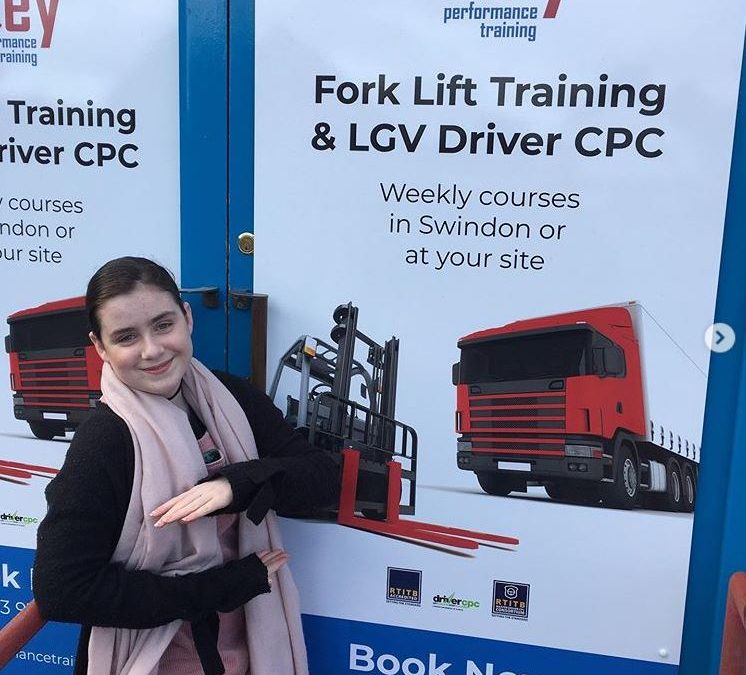
Take a photograph or selfie in front of a forklift truck with your arms in the position shown and add it to your social media account. This can be on Facebook, Instagram, Twitter or LinkedIn. Remember to use ALL THREE hashtags #IWD2020 #EachforEqual #KPT and tag the relevant Key Performance Training Account on that platform, or that of David Gearon or Bob Hayward.

How the winner will be decided:

The winner will be the person whose social media post gets the most likes and shares. The photograph must be of the person who owns that social media account, they must have their arms in the position demonstrated, the post must contain all three hashtags and tag Key Performance or one of the two owners.

Why are we doing this?

At Key Performance Training, we are choosing to challenge stereotypes, broaden perceptions, and seek to be a pathway to better equal employment opportunities.

In the last two years, only five of the 80 delegates who have become qualified forklift operators through Key Performance Training were ladies. There is no reason for forklift operating to be the preserve of our male colleagues. There is no reason that anyone, male or female, must be big, strong or bulky to operate a forklift. The fact is that Forklift Trucks are just as suitable for men and women to drive as are cars.

A career as a Forklift driver is an underrated profession and often overlooked by women who may not recognise the high demand for Forklift operators. Anyone over 16 can drive forklift truck and earnings are above average for warehouse and logistic roles. Forklift driving can be a great pathway into better employment for everyone #EachforEqual

For more information contact Bob Hayward at bob.hayward@keyperformancetraining.co.uk