Cross- training employees can be a catalyst to a huge improvement in workforce productivity of any business. Here are the 5 main benefits of cross-training in the warehouse sector, however the advantages do not stop here, they are endless!
What does it mean to cross train an employee?
Cross-training is building the skills of your employees so that they can work in several different roles and carry out tasks even if they aren’t part of their main daily responsibilities. As a result, you, as the employer, can increase productivity in the workplace by making the maximum use out of the latent talents and skillsets of your employees.
For example, when summer is approaching and people are rushing into travel agents to book their last-minute holidays, if employees who usually handle telephone customer service enquiries are also trained to handle walk-in customers, then the travel agency will be more able to handle the increased demand.
Similarly, in the warehouse sector if someone in your team who usually works in production work could also operate forklift trucks you could move them temporarily to the loading team if there is a spike in demand. This prevents orders falling behind and increases the overall efficiency and effectiveness of your team.
Cross-training, specifically in the warehouse sector, is something that gets spoken about more than it is actually implemented. What is the main reason for that? Because people are simply unaware of the multitude of gain generated from this method. Hopefully after reading this blog post, you will be part of the percentage who are aware of the benefits, and will be tempted to use that knowledge to your advantage!
1. Great return on investment
The key to cross-training making a great return on investment is realising that the talent you are trying to outsource is most likely already within your business. Once you’ve had this realisation and act upon it, you are likely to see ways to boost to your bottom line.
2. Improved employee retention
A study conducted at the university of Warwick via Forbes found that on average, happy and engaged employees are 12% more productive than their unhappy counterparts. Cross-training has a significant effect on individual employee happiness because with a broader range of skills employees will feel as though they are being invested in and in return will become more engaged. Continuously focusing on the skillset of your existing employees rather than trying to recruit new employees with prior qualifications, will keep long term employees more committed to stick around.
3. Reduced impacts when employees are absent
This is a fairly straightforward benefit but often people do not realise the extent of a positive impact having cross-trained employees can have when absence occurs. For example, if your business has 10 employees and each of them have a total of 25 holidays per year that would be a total of 250 days a year where at least 1 person’s list of responsibilities are not getting completed. Does that sound efficient to you?
When your work-force is “cross-fit”, you will be able to substitute somebody from a less busy shift or a different sector who has the knowledge to cover for the absent employee. As a result, a significant increase to the number of responsbilities and tasks that are being completed will arise and the productiveness\output of the company will expand.
Ideally, even in a small company, you would have three people or more who could do any single job – even if only to ‘hold the fort’ professionally for a shift or a day. There is a direct link between the competency of your people and the confidence your customers have in you as a supplier.
4. Better employee collaboration
There are two types of employees. Those who have just expertise in one area (not cross-trained) and those who have expertise in one particular aspect but also still have a broad knowledge of other aspects in the company (cross-trained). When you are the non-cross trained type of employee you are hyper-focused to that one particular area and therefore find it difficult to collaborate with those in other sectors of your company.
Good collaboration is crucial within a company as it allows you and a team to solve problems together, speeding up the process of finishing a task and avoiding breakdowns in communication.
5. Makes your company more agile
The actual process of cross-training employees may reveal areas of strengths and weaknesses in employees. Throughout the on-the-job-training hidden talents and strengths may be revealed that means people would work better in another area or field of the business. You can then change people around accordingly. This makes your company more agile and responsive to change as-well as increasing flexibility when needing to fill last minute absences.
Being an agile company has a range of benefits such as more resilience, quicker decision making, more collaborative and also quick mobilization.
How Key Performance Training can help your business with cross-training
Key Performance Training based in Swindon and RTITB Approved, can unlock your potential with novice, refresher, experienced courses in Forklift Training, First Aid, Health and Safety and Fire Marshall Training, amongst others, at regular times throughout the year in a specifically designed training centre or on-site at your own location if you prefer. From individual training to large scale corporate roll outs.
1. We help you to find work after completing a course.
Are you looking to find a job, a better job or a career?
Our aim is to provide delegates with a pathway to employment. By pathway, we don’t mean that we are providing the training and that’s all. We provide a guided pathway. One, where even after the delegates training course ends, we are there to guide them in the direction of employment.
Once completing a course, we will first give you the contact details of the job coaches and employment agencies we work with who will give you the coaching needed to find a job, a better job or a career.
You are then given the option to subscribe to our email newsletters where we send out forklift operator vacancies in Swindon and the surrounding areas. This means our previous delegates are often the first to hear about forklift driver job roles in their area.
With this process we have in place, as well as the increasing demand for operators, delegates are commonly finding work 1-2 weeks after completing a course with us.
2. Trainers with over 20 years of experience.
With any type of training, teaching or coaching the trainer, teacher or coach is the determiner for not only your success but also your experience and enjoyment. Wouldn’t you agree?
At Key Performance Training we believe that our experienced trainers are what takes our forklift training centre from great to EXCELLENT. Many of our previous delegates and reviews state that our trainers made their experience on a course with multiple reviews stating ‘the best trainer I’ve ever had’.
David and Calum both have over 20 years of experience in forklift operating and training. Therefore, they know first hand the potential dangers of operating and the best ways to avoid these risks. Both, share the same goal of minimising these risks by providing training that prioritises safety.
As we believe on any course that the determiner of success is the trainer, we offer FREE taster sessions for potential delegates to come along to the warehouse and meet our trainers. From there, you will hopefully share the same view as us on how friendly, calming and knowledgeable both David and Calum are. Especially for those apprehensive novice drivers, meeting the team in person before a course can make all the difference and calm your nerves before course week!
3. Our Reviews- They speak for themselves!
“Would definitely recommend” ‘Credit for my achievements go to him.’This delegate has never been out of work since completing a course with us!
Are you interested in completing a forklift course to expand your employment oppourtunities?
Are your warehouse looking to up skill or cross-train staff to operate forklifts?
After reading this blog post we hope you choose us as your forklift training centre! To get in contact about the courses we offer or for general enquires contact;
We’ve been keeping busy at the Key Performance Training warehouse. With both of our trainers (David and Calum) being able to teach at the same time in our double arena, more and more delegates are gaining forklift qualifications and unlocking their pathway to employment!
This is our cheerful monthly blog post where we recognise and congratulate some of the delegates who are now fully qualified, excellent operators! So lets take a look back at some of the fantastic delegates who have completed a course and gained their license with us throughout the month of September…
Connor and Bill
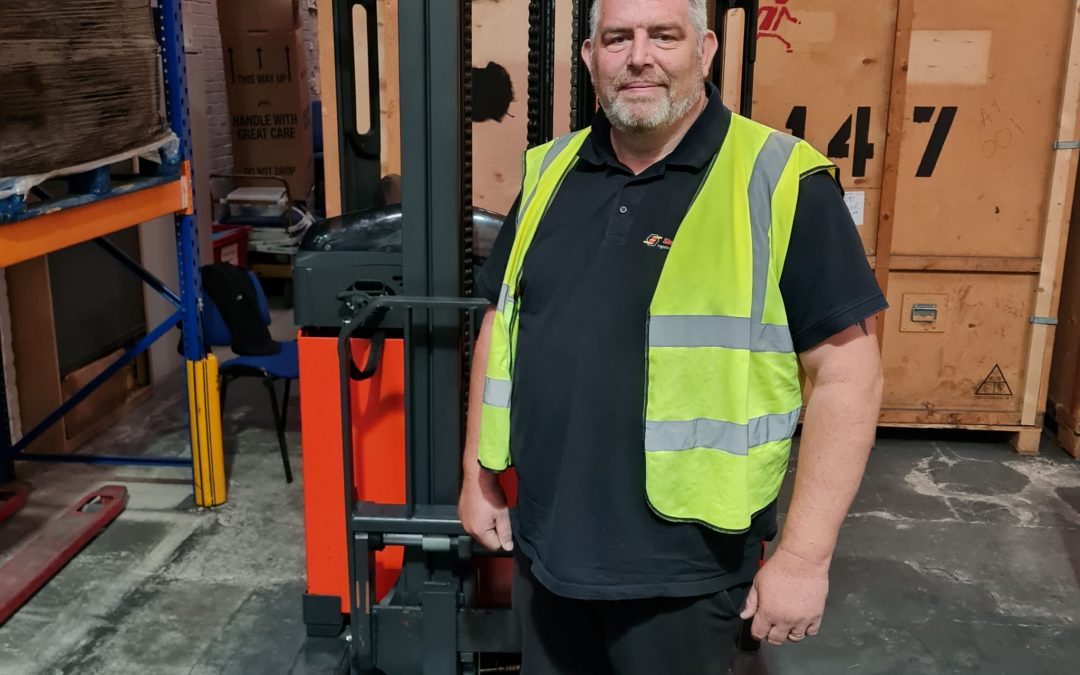
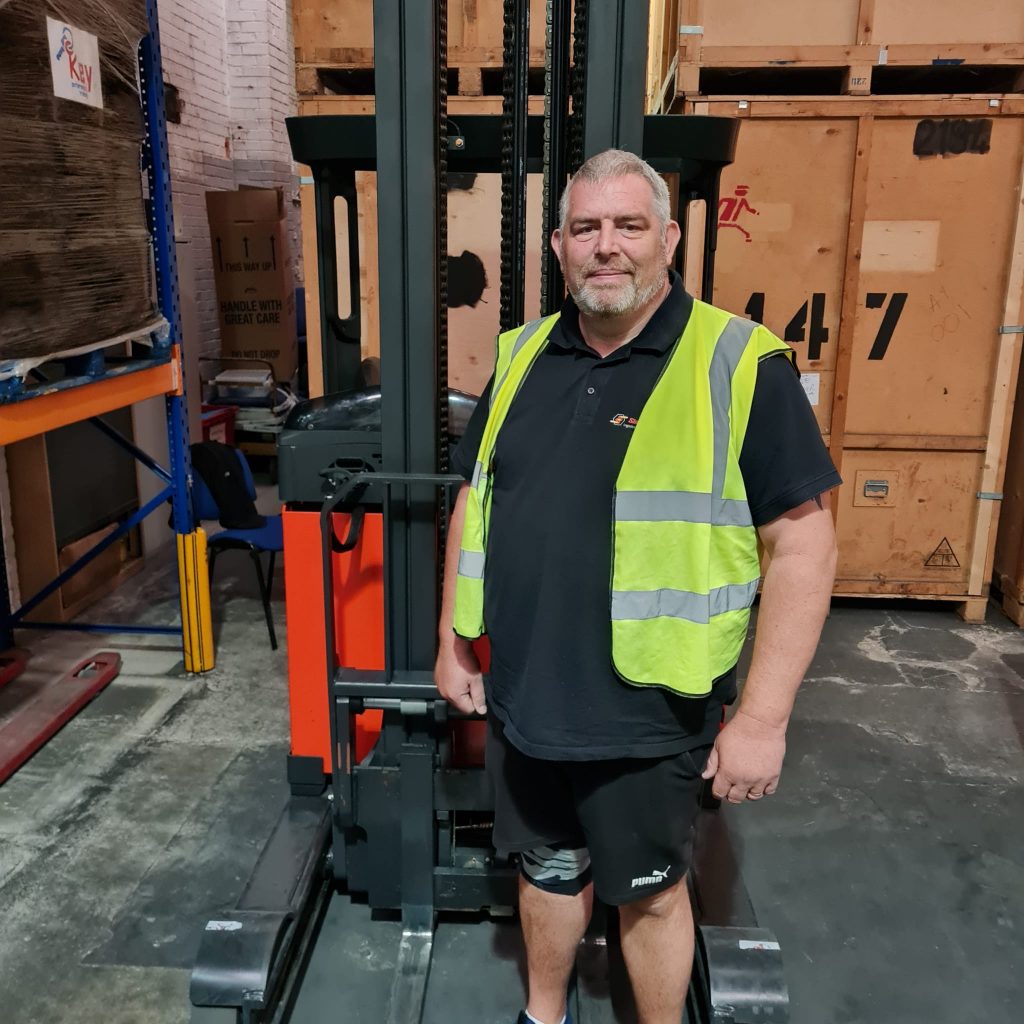
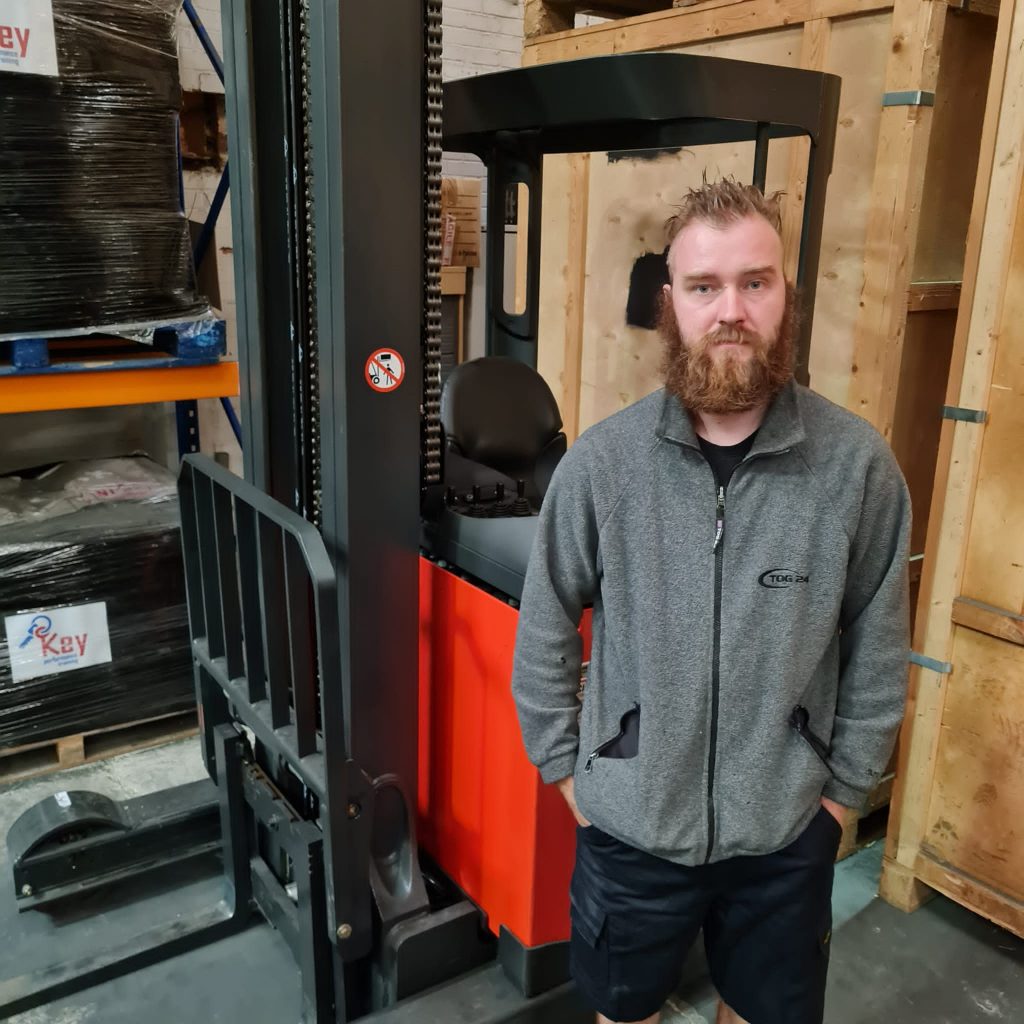
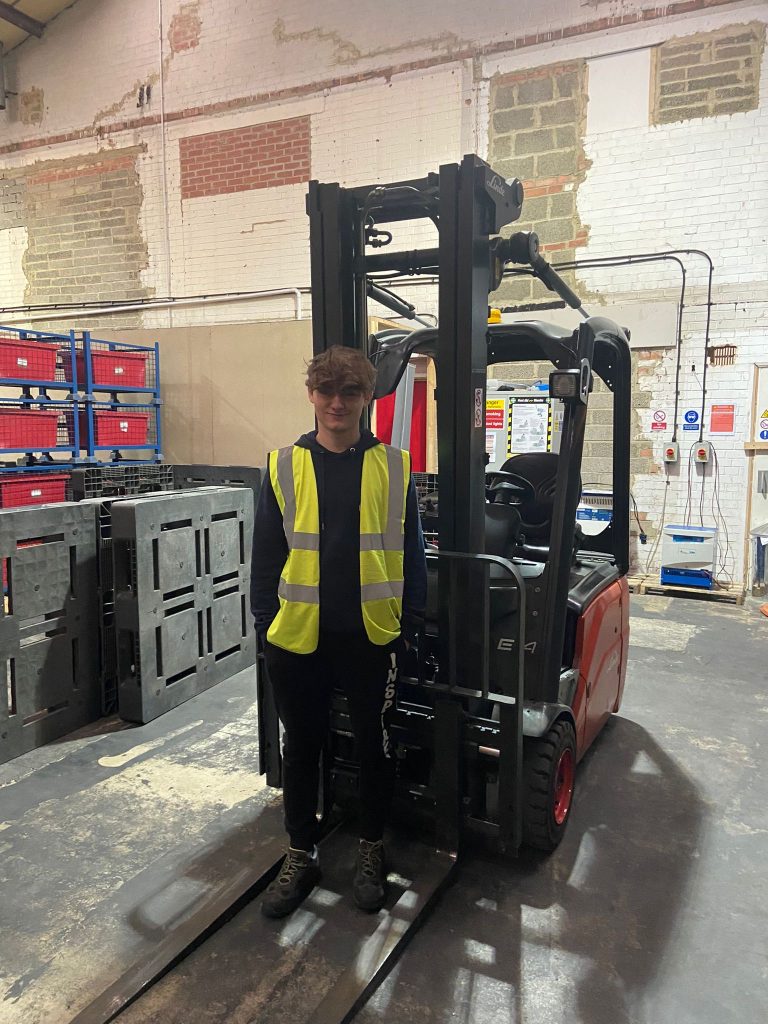
A big congratulations to Connor (pictured) and friend Bill who both passed their counterbalance and reach truck novice courses by completing a three day CB novice and then going onto complete a two day reach truck conversion.
Both boys were 19 years old and unsure on their next step towards a career. They came along for a taster session and quickly decided that forklift operating would be a good option and so booked in for a course.
When Connor was asked if he would recommend Key Performance Training, he answered; “Definitely, the instructors and facilities are all good and they give you the names of the agencies so it’s easy to find a job afterwards”.
Paul
Paul came to us as an experienced operator looking to refresh and expand on his skills. He already had experience as a counterbalance operator but needed to renew his license and so completed a Counterbalance refresher and Reach conversion course.
David picked up quickly that Paul was a competent driver who just needed a reminder on the latest legislations and safety procedures that have been updated since he last completed a course.
With no surprise to David, Paul passed with flying colours and is now a fully qualified operator of both trucks!
Artur
Congratulations to Artur who completed and passed his Reach truck conversion course.
The RTITB Counterbalance Lift Truck conversion course is aimed at currently certified lift truck operators wishing to convert their existing lift truck driving qualification and skills to include a counterbalance lift truck.
From completing the course, Artur gained a suitable and sufficient understanding of current relevant legislation, learnt new skills and the best practice of counterbalance lift trucks up to 5000kg.
Terry
Well done to Terry who passed his Counterbalance Novice course. As a novice operator, Terry had no prior experience of lift truck operation but wished to achieve a nationally recognised qualification in the safe and correct use of counterbalance lift trucks.
He was a pleasure to train and took everything on board excellently with a real eagerness to learn.
Now, Terry will have many more opportunities to get back into employment, especially as the counterbalance lift truck is one of the most common lift trucks in use today and are the workhorse of most materials handling operations.
Mike
Mike already had experience operating a reach truck but also wanted to expand his career options and get a license in safe operation of a counterbalance truck. Therefore, he completed a counterbalance conversion course.
Also, Mike recognised that he needed to refresh his Reach license as to follow health and safety legislations, licenses have to be refreshed every three years. He also completed his Reach truck refresher with us in the same week.
We would like to congratulate Mike, not only on his successful completion of the course but also for following the law and sticking with the health and safety legislations to get his license refreshed.
Why train with Key Performance Training?
We can offer RTITB accredited operator training and instruction from fully qualified and experienced instructors and examiners who are able to carry out training to the legal requirements.
This can help the likelihood of accidents and improve safety of operators and pedestrians in the workplace.
All our RTITB courses are held in our Swindon warehouse. If , however you are looking for an onsite course, we can cater to this too.
No matter if you’re working in a warehouse as a forklift operator or an office as an administrator, there are always possible dangers. You need to be aware of them and act immediately to ensure the safety of yourself and other colleagues. When I say ‘aware’, I don’t mean this lightly. There is a huge difference between being aware and being actively aware. Being just ‘aware’ often leads to situations where it’s too late. When you are actively aware you can spot an issue and resolve it quickly before an incident occurs.
Safety professional and coach for better risk management strategies- David Gant took to his twitter to ask his large following one question.
“What is the one piece of safety advice you would give to a worker?”
The responses were excellent with so many acknowledging how dangerous working in warehouse environments can be and having safety as their number 1 priority when at work. We want to share this advice with you in hope that it will help at least one person change their mindset on the importance of safety at work.
“Don’t do a job that you aren’t qualified to do, and do the jobs that you are qualified to do according to the process”.
More commonly than you would think, warehouse managers and supervisors cut corners and allow unqualified workers or those without refreshed licenses to operate forklift trucks. This is when accidents will occur. Even if you have been given permission to operate a truck this does not mean it is safe and as many experienced operators would tell you; it’s never as easy as it looks.
“Would you let your most loved one ‘be there’ ‘do that’ ‘take that chance’. If it’s not good enough for them; it isn’t good enough for you! You are important to them too”
Every time you get on the truck without inspecting, walk round a corner without making yourself known, drive too fast to get a job done or become complacent in any way, think to yourself; would I be happy for the one I love most to do what I am doing? If the answer to that question is no, don’t do it. It really is that simple.
“You can’t just talk the talk, make safety a priority.”
Now a piece of advice for all managers and supervisors; the costs of accidents that could occur due to a lack of safety are never worth the time saved by not putting in place and adhering to safety measures. Read that again.
“Never walk past an error”
We all make mistakes and not everyone is going to be thinking of safety every second of the day. In your workplace, you should first work together and encourage one and other to make safety an individual number 1 priority. You should then work together to encourage each other to make the safety of others a second priority. This way, even if the individual isn’t on their safety ‘A game’ there will always be back up to correct their errors.
Important- you should never assume that someone is going to correct your errors and act at all times as though you are in complete control of your own and everyone else’s safety.
“If you aren’t sure it’s safe, it probably isn’t”
1. Trust your instinct.
2. Double check.
3. Report it.
Finally, here are a checklist of questions you should ask yourself;
Will doing it this way get me home safely?
Am I concentrating 100%?
Do I need to have a break to prioritise safety?
Would I let my loved ones take this chance?
Am I following the companies safe work procedures?
Is safety my number 1 priority?
Key Performance Training are a forklift training company based in Swindon who also cover areas around Wiltshire and the South west. As an RTITB accredited centre, safety is genuinely a number one priority of the business and all delegates who complete a forklift training course should also take on this mindset.
Although lift trucks are safe machines, every day workers are injuring themselves due to unsafe operating. Even those who have had the highest level of forklift training find themselves in crucial accidents as a result of getting too comfortable and loosing concentration.
As an RTITB accredited training company, safety is our number 1 priority and we hope that after completing a course with us it will be yours too. At Key Performance Training, we believe that the first step in avoiding mistakes is to be aware and educated on the possible mistakes you can make, especially the most common ones.
Here are the 4 most deadly mistakes you can make when operating a forklift truck. However, all it takes is one mistake; so don’t let it be you.
1. Driving with an elevated load
Many experienced operators believe they can get away with driving the truck with an elevated load and so do not bother to lower the forks. This is a huge mistake to make and is one of the most common causes of fatal injuries and deaths in forklift operating.
When the truck has a higher centre of gravity, it becomes much less stable meaning one fast turn can cause the truck to tip over and potentially crush the driver on its way down.
Reminder- if you do find yourself in a situation where your forklift has overturned you should always lean in the opposite direction to the way the truck is tipping rather than attempting to escape before the truck overturns.
2. Not inspecting the forklift truck
Inspections need to be a thorough procedure that is carried out each time the forklift is used. It only takes a matter of minutes but could potentially save lives. Some of the areas that should be a part of your daily inspection include; the tyres, brake and transmission fluids, loose parts or leaks, instrument and pedals.
Check out our other blogs for more in detail information about the importance of carrying out pre-op checks and the ones that are often forgotten.
3. Operating with a non- secured load
Non- secured loads are just an accident waiting to happen. Many operators are aware of the consequences but carry on risking it and don’t secure loads before operating. Yes, at times you could get away with it and yes your friend may have gotten away with it but when it goes wrong it won’t be you suffering but someone else in your workplace who has been struck by this load due to your negligence.
4. Blind spots
Blind spots in busy warehouses are something that is impossible to avoid, the actual mistake here is a miscommunication between workers. Not only are forklifts dangerous for the operator, they also cause great danger to other works and pedestrians. The best way to avoid this is by maintaining good communication at all times.
As workers in a warehouse, you need to be sure to follow the correct safety procedures, signs , signals. As operators, you need to enable the workers to follow these procedures by making sure your sound and light signals are working before moving and also that you are staying within the zones.
We’ve been keeping busy at the Key Performance Training warehouse. With COVID restrictions easing, we have been able to work at double occupancy; which means twice as many delegates can gain their license and unlock their pathway to employment! David and Calum worked hard on updating the warehouse so that we could have two sections for separate courses and the two of them have been busy ever since.
As we have entered a new month and summer is coming to an end, let’s take a look back at some of the successful delegates who have completed a course and gained their license with us throughout the month of August.
Amar Goes
Amar already had a Counterbalance truck license but wanted to expand his employment opportunities even further. He booked in and completed our Reach truck conversion course with an excellent pass rate.
He was also one of our first ex-Honda associates who completed a course with us since the closure of the Swindon Honda site. Our main aim as a business is to help delegates find a pathway to employment which is why we are offering discounts to all ex-Honda employees in a hope to get them back into employment as soon as possible.
Jackson and Francis:
Congratulations to Jackson and Francis who both completed and passed their Counterbalance truck refresher courses. Not only is it great that they did well and was successful on the course but it’s great to see delegates following the law and making sure to refresh their license every 3 years.
If you gained a forklift license over 3 years ago, then this is your sign that it needs to be refreshed if you are still operating or using forklift trucks.
For more about hazards that could occur if you do not refresh your license: https://keyperformancetraining.co.uk/these-beasts-are-of-great-assistance-and-dangerous/
Jack:
Jack completed his Reach and Counterbalance truck courses with us. For a delegate who wants to learn how to operate both trucks we put them onto a reach novice course for 3 days and then a conversion Counterbalance course for the last two days.
Although Jack is one of the youngest delegates we have trained (age 16), he absolutely smashed the course with an amazing pass score on both the theory and practical.
To check out some of jacks lift truck steering skills head over to our Instagram: @key.performance.training
Andre Gooden:
Andre was very successful in his Counterbalance novice course and went from someone who had never operated a forklift before to a confident driver in only a few days!
Often, delegates who come in for a novice course are very apprehensive and nervous that they may not succeed. If you are one of those people who is letting nerves put you off starting your career as a FLT driver, we can assure you that our trainers are qualified and experienced in working with delegates at all levels. With both our trainers having over 10 years in the industry, the chances are you won’t be the worst they’ve seen!
What are you waiting for? Book in for one of our forklift truck courses and perhaps you could be featured on next months blog!