Dispelling the myth of the forklift licence
“I’ve got my forklift licence.”
It’s a phrase heard regularly across warehouses, factories, construction sites and logistics operations. But here’s the problem: there is no such thing as a forklift licence in the UK.
That might come as a surprise to many forklift operators and employers. So, what do you actually need to legally and safely operate a forklift?

So, is there really a forklift licence?
No. Unlike driving a car on public roads, there is no government-issued forklift licence that allows someone to operate any forklift.
Instead, UK health and safety law requires employers to ensure that anyone operating material handling equipment (MHE), including forklift trucks, is adequately trained, competent and authorised to do so.
Forklift training is generally delivered by regulated training providers such as us, and results in a certificate of training or similar evidence of competence. This is sometimes informally referred to as a “forklift licence” or “FLT licence”.
The terminology may be convenient, but it can create confusion.
For a list of our most common forklift courses, please click here.
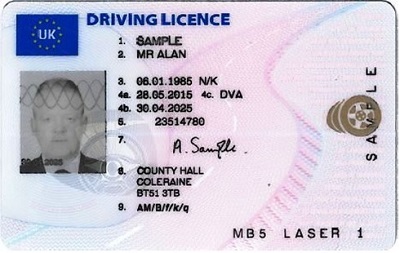
Why does everyone call it a licence?
The term “forklift licence” has become widely used because it provides a simple way of describing evidence that an operator has completed forklift training.
However, completing a training course doesn’t mean an operator has a permanent licence to drive forklifts.
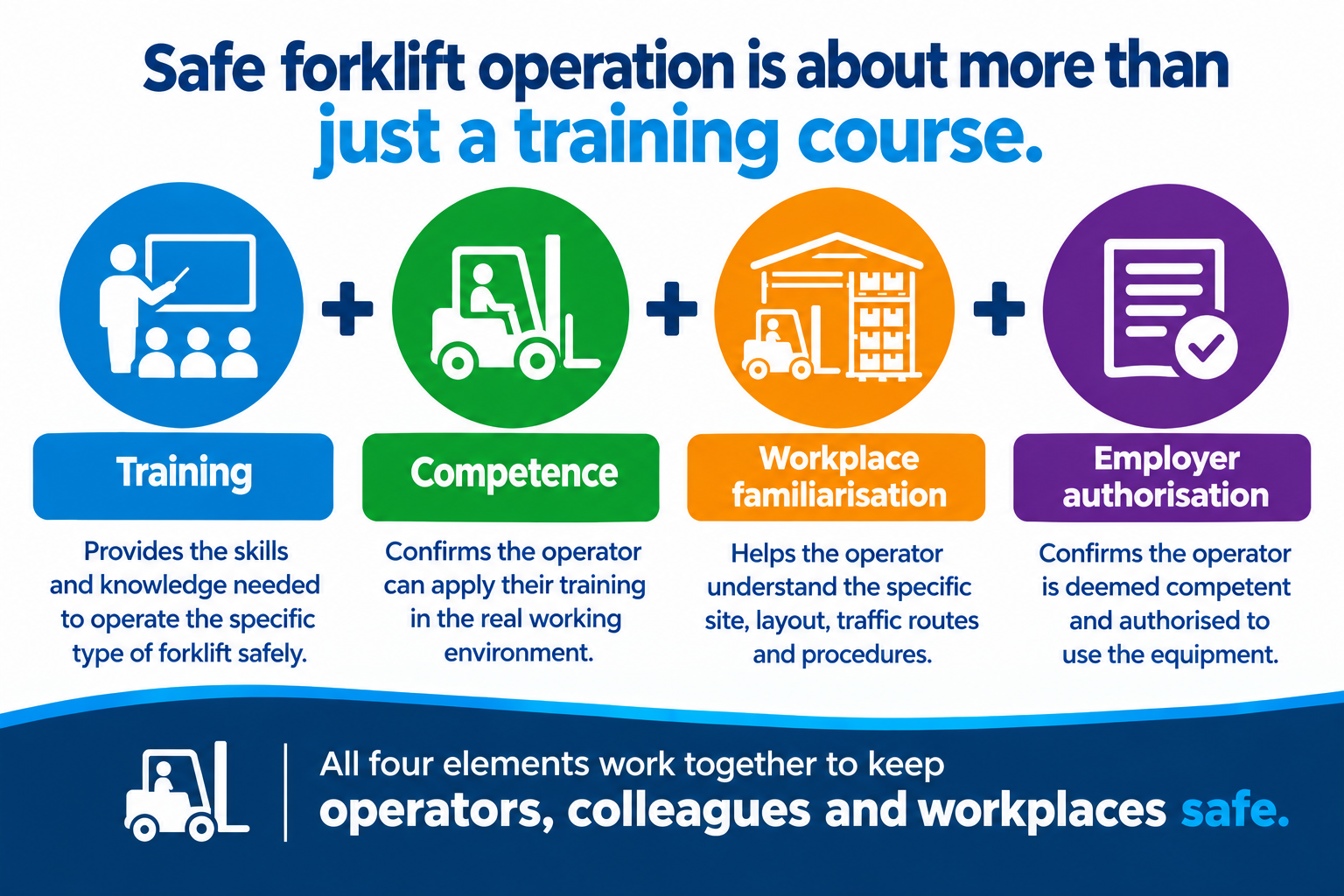
Training demonstrates competence on particular types of equipment and under particular conditions. The employer must still assess the operator’s competence and authorise them to operate the equipment in their workplace.
What does the law actually say?
The Health and Safety at Work Act 1974 and the Provision and Use of Work Equipment Regulations 1998 (PUWER) place duties on employers regarding the safe use of work equipment.
More specifically, LOLER and the HSE’s guidance on lift trucks are also important considerations depending on the equipment and how it is being used.
The HSE’s guidance makes it clear that lift-truck operators must be adequately trained and competent.
Training should cover the type of truck being operated, the working environment, and the tasks the operator is expected to perform.
A certificate isn’t a licence to drive any forklift
One of the biggest misconceptions is that once someone has completed a forklift course, they can operate any forklift anywhere.
That’s not the case.
Forklift training is typically truck-specific. An operator who has trained to operate a counterbalance forklift shouldn’t automatically assume they are competent to operate a reach truck, rough-terrain telescopic handler or another category of truck without the appropriate training.
There may also be differences between workplaces.
An experienced operator moving pallets around a large warehouse may still require familiarisation when moving to a different site with different traffic routes, racking systems, floor conditions, pedestrian movements or operating procedures.
What about refresher training?
Another common myth is that forklift training simply “expires” after three years.
There isn’t a universal legal three-year expiry date for forklift training.
However, the HSE recommends that employers provide refresher training where appropriate. It is particularly important where an operator’s performance has deteriorated, there has been an accident or near miss, the operator has not used the equipment for some time, or there have been significant changes to the workplace or equipment.
Many employers use three years as a sensible benchmark for reviewing operator competence, but this should not be confused with a legal expiry date.
What does an employer need to do?
Employers have an important role to play. Simply asking to see a “forklift licence” isn’t enough.
Employers should ensure that operators:
- Have received appropriate training.
- Are competent to operate the specific type of forklift.
- Understand the risks associated with the task and environment.
- Receive appropriate familiarisation when necessary.
- Are authorised to operate the equipment.
- Receive supervision appropriate to their level of experience.
- Receive refresher or additional training when required.
Keeping accurate training records is also important, as it provides evidence that appropriate steps have been taken to ensure operators are competent.
The bottom line
So, the next time someone says, “I have my forklift licence,” remember that there isn’t actually a government-issued forklift licence in the UK.
What they should have is appropriate training and evidence of competence, followed by authorisation from their employer to operate the relevant equipment.
Getting the terminology right isn’t just about semantics. Understanding the difference between a “licence”, training, competence and authorisation can help employers manage their legal responsibilities and, more importantly, help keep forklift operators and everyone working around them safe.
Don’t let the forklift licence myth put your workplace at risk.
If your business needs forklift training, refresher training or advice on operator competence and authorisation, speak to us today to ensure your operators have the right skills and knowledge for the equipment and environment in which they work.
Contact us on 01793 975353 or [email protected] for more information about how we can help or to book your course today.
Need more information?
For more information please do get in touch.
You can reach us via our contacts page, via email or just give us a call on 01793 975353